 Daniel Mitchell
Key Takeaways
- F10 on a Miele dryer reports the drum motor not starting, not reaching speed or drawing abnormal current; it names the symptom, not the part.
- Five causes sit behind it, and several of them, such as a jam, a belt, lint or an overloaded drum, do not need a new motor.
- Turning the drum by hand with the machine off separates mechanical causes from electrical ones.
- Under about ten years old a drum motor is usually worth fixing; past ten it is marginal, and past 12 only cheap wear parts are.
- Do not run a dryer that shows F10 or smells of burning; the code page flags a fire risk if the motor overheats.
The Bottom Line
Check the load, turn the drum by hand and ask for line items before agreeing to a motor. A drum motor is usually worth fixing on a dryer under about ten years old and marginal after that. The price is confirmed after diagnosis, with a written estimate before work begins.
A drum that will not turn is one of the more alarming things a dryer can do, because the motor behind it sounds like the expensive part. Sometimes it is. Often the real fault is cheaper: a belt, a jam, or lint packed around the motor. This guide is about the motor as a single part inside a Miele tumble dryer, not the whole machine. For the whole-dryer decision, start with our guide on whether a Miele tumble dryer is worth repairing, and come back here once the drum is the problem.
| Your situation | Worth fixing? | Why |
|---|---|---|
| Under about 10 years old, motor is the only fault | Yes | One repair on a machine with years left |
| Between 10 and 15 years old | If the total stays under half the price of a new equivalent | The 50 percent rule decides it |
| Over 15 years old | Usually not | Only cheap wear parts are worth doing at that age |
| Motor hums but the drum does not turn | Find the cause first | A jam, a broken belt or a seized bearing looks the same |
| Burning smell, or the motor makes no sound | Stop and get it diagnosed | Failed windings or a start problem |
| Second major repair in two years | No | A pattern of failures, not a one-off |
Is a Miele Tumble Dryer Drum Motor Worth Fixing?
On a machine under about ten years old, usually yes; after that it depends on the quote and on what else is wearing. Our cost guide lists a drum motor repair from $350 in total, and our repair-or-replace guide marks the drum motor as marginal on machines past ten years old, so age is the deciding factor, not the part. The final price is confirmed after diagnosis on site, with a written estimate before work begins.
Two other rules from the same guides help. Between 8 and 12 years, repair if the cost is under half the price of a comparable new Miele dryer. Past 12 years, repair only simple fixes such as a belt, a filter motor or a thermostat, and treat a major component failure as the point to replace. If this is the second major repair in two years, replace regardless of age.
What Does F10 Tell You About the Motor?
That the control board has detected the drum motor is not starting, not reaching speed or drawing abnormal current. The F10 page lists the symptoms: the drum does not turn, the motor hums but nothing rotates, the code appears when the motor should begin turning, and there can be a burning smell from an overloaded motor.
The code names the symptom, not the part. The same page lists five causes behind it, and not all of them mean a new motor:
- Seized motor bearings. Lint in the motor area or worn bearings prevent rotation.
- Broken drive belt. The belt between motor and drum has snapped.
- Motor overload. Too big a load or a jammed drum stops the motor turning.
- Failed motor windings. The coils have burned out. This is the one that means a new motor.
- Motor capacitor failure. The start capacitor has failed, on models that have one.
The Hand-Turn Test That Settles Half the Question
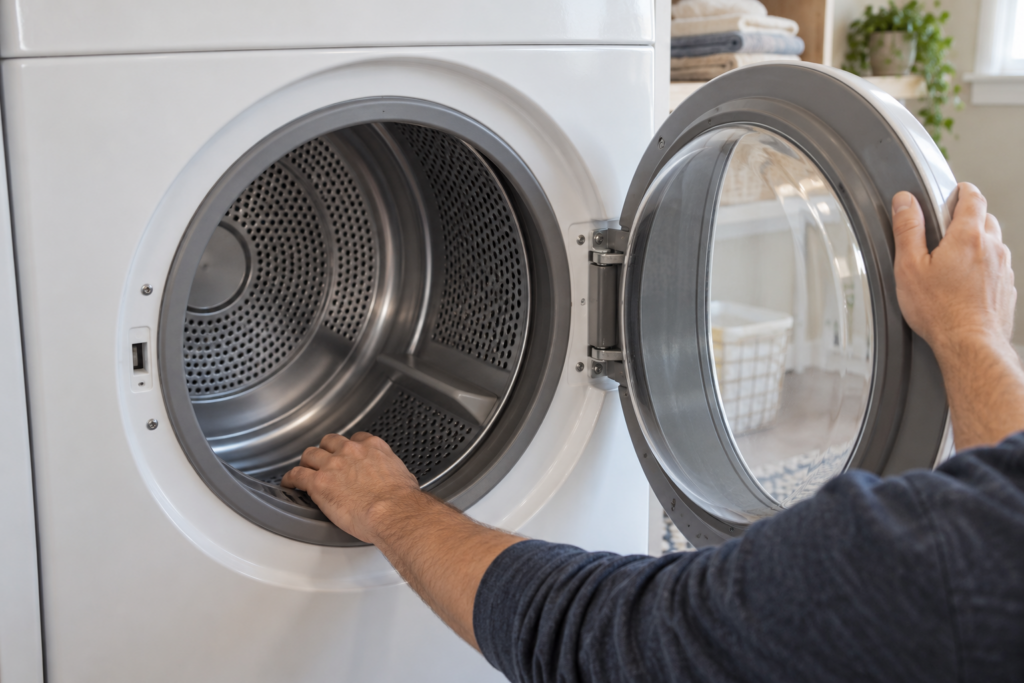
With the dryer switched off, reach in and turn the drum by hand. The F10 page says it should turn with moderate resistance, and that a drum that will not turn at all means the belt may be caught or the drum is jammed. That one check separates the mechanical causes from the electrical ones before anyone buys a part.
- Reduce the load. Remove some items; an overfilled drum can stop the motor starting.
- Turn the drum by hand. Stiff or locked points to a jam, a caught belt or a seized bearing, not to burned windings.
- Cut the power for ten minutes. The motor controller may need to reset. This only helps when the cause was a temporary overload.
- Listen to an empty cycle. A smooth ramp-up means the motor is fine, a hum without rotation means something is jammed, and silence means the motor is not getting power.
- Check the breaker. A motor short can trip it. Do not keep resetting a breaker that trips.
A drum that turns freely by hand while the motor hums and will not drive it is the case that points toward the belt or the motor, and that is the case for a technician.
Which Causes of F10 Cost Less Than a New Motor?
Several: an overloaded drum costs nothing, lint around the motor costs a cleaning, and a broken belt is a modest repair next to a motor. Our dryer cost guide prices the drive belt and the drum bearings as separate lines from the drum motor, which is exactly why the diagnosis matters. A technician who reads F10 and quotes a motor without turning the drum or checking the belt has skipped the step that decides the price.
- An overloaded drum. Costs nothing: take some laundry out and try again.
- Lint around the motor. A cleaning, not a part.
- A broken belt. A modest repair next to a motor; our cost guide prices it as its own line.
- A seized bearing. A bearing job, priced separately from the motor, and the motor can stay.
When you get a quote, ask for the line items. The motor, the belt, the bearings and the capacitor are different parts with very different costs, and the right answer to a drum that will not turn is rarely the most expensive one. If the cause is a seized bearing, the repair is a bearing job and the motor can stay.
When Replacing the Dryer Makes More Sense
When the motor has genuinely failed on an old machine, or when it is one of several faults. A dryer past 12 years with burned windings, a second repair in two years, or a heat pump circuit that also needs work is telling you its age in several places at once. Weigh the machine, not the motor. Our tumble dryer repair vs replace guide works through the full decision, including repair history and energy savings from a newer model.
Is It Safe to Keep Running a Dryer Showing F10?
No. The F10 page says a motor problem prevents drying and can pose a fire risk if the motor is overheating, and that F10 should be resolved before the dryer is used again. A reset is allowed, but the page says it is only effective if the cause was a temporary overload.
Stop immediately if the motor makes no sound or you smell burning. Do not run repeated cycles to see whether the code goes away, because every start on a struggling motor adds heat. Leave the dryer switched off at the mains until the cause is known.
Getting a Straight Answer From the Visit
The F10 page gives a professional repair time of one to three hours, so a visit can usually diagnose and repair in one trip. Tell the technician what you heard in the empty test, whether the drum turned by hand and how old the machine is. Our dryer repair service covers the motor, the belt and the bearings, and the technician will say plainly when a machine is not worth the work. Read the tumble dryer repair costs guide for the full price table, then schedule a visit or contact us with the code and the model number.