 Daniel Mitchell
Key Takeaways
- This site's guides put the design life of a Miele refrigerator at 15 to 20 years; maintenance decides how much of that you get.
- Dust the vents and the back of the unit about every six months, because the compressor works harder when it cannot shed heat.
- Check the door gaskets once a year; a seal that grips a dollar bill is doing its job.
- Hold the refrigerator at 37 to 39°F and the freezer at 0°F; colder only adds compressor work.
- Act on a new buzz, frost or a fault code such as F4 or F11 while the fix is still small.
The Bottom Line
Clean the vents twice a year, check the gaskets yearly, keep the temperature where it belongs and do not ignore new noises or fault codes. These habits cost almost nothing and protect the compressor.
Owners ask how long a Miele fridge will last because it is a lot of money to put into a niche, and the honest answer has two halves. This site's guides describe Miele refrigerators as built for 15 to 20 years, which is long for the category. How much of that you actually get depends on a handful of habits that cost nothing, and on catching the small warning signs before they become a compressor problem. This guide is about those habits for a built-in Miele refrigerator.
| Habit | How often | What it protects |
|---|---|---|
| Dust the vents and the back of the unit | About every six months | The compressor, which works harder when it cannot shed heat |
| Check the door gaskets for cracks and debris | Once a year | Running time and energy use |
| Verify temperature with a thermometer in water | After any change, and now and then | Food safety and compressor load |
| Leave air space around stored food | Every time you load it | Even cooling and fan airflow |
| Act on a new noise or a fault code | As soon as it appears | Small faults staying small |
How Long Does a Miele Built-In Refrigerator Last?
For the Miele built-in refrigerator lifespan, the figure this site gives is 15 to 20 years, and the guides on the site say that a Miele is a young appliance at twelve. That is a design target, not a promise, and no maintenance routine turns it into a guarantee. What the routine does is remove the avoidable ways a refrigerator dies early, and almost all of them come back to heat, strain or neglect of a fault that was easy to fix at first.
The same guides draw a practical line for repairs: under ten years, repair almost anything; past fifteen, price a repair against a replacement and look at how often the machine has needed attention. Maintenance is what keeps you on the favorable side of those lines.
How Often Should You Clean the Vents and Coils?
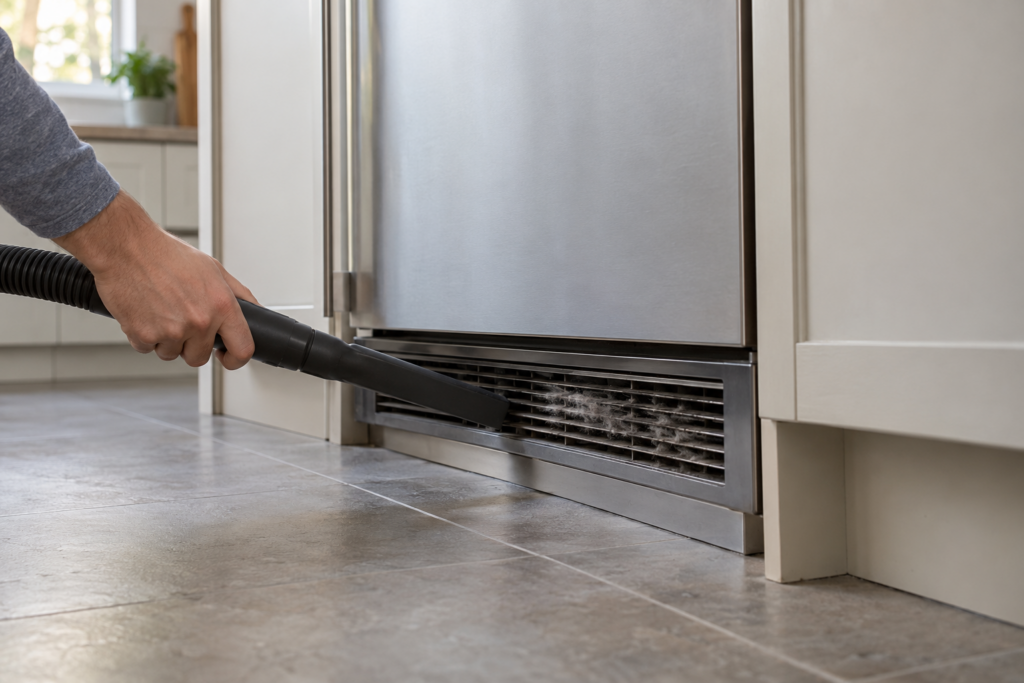
About every six months. The site's refrigerator noise guide says to dust the back of the unit twice a year, and explains why: the compressor needs airflow to cool down, so dust over the vents or the compressor makes it work harder, and the strain shortens its life. A loud buzz is often the first sign.
- Find the vents. On a built-in unit these may be behind a grille at the bottom or at the top of the niche; the manual for your model shows where.
- Use a soft brush or a vacuum with a brush head. Lift the dust off rather than pushing it deeper.
- Keep the niche clear. Nothing stored in front of the vents or stacked against the unit.
- Do not open internal panels. The guide says internal parts carry live voltage and the sealed refrigerant system, which is for a certified technician.
Do the Door Gaskets Affect How Long It Lasts?
Yes, because a weak seal makes the compressor run longer to hold the same temperature. The noise guide recommends checking the gaskets once a year for cracks or debris, and our temperature settings guide offers a simple test: a seal that grips a dollar bill is doing its job. A clean gasket also seats better, so wipe it with a damp cloth and dry it.
It is the cheapest inspection in the house and it prevents the most common slow drain on a refrigerator, a compressor that never gets a rest. Door alignment matters too: a door that does not close fully, or one that was left ajar, makes the system work harder.
Why the Temperature Setting Matters
Because colder than necessary is extra work for the compressor with no benefit. The site's temperature guide says to hold the refrigerator at 37 to 39°F and the freezer at 0°F, and that going colder wastes energy without making food safer. Verify with a thermometer in a glass of water on the middle shelf, since the display shows the target and not the reality.
- Do not turn the dial down to cure a warm cabinet. If it drifts warm, the cause is coils, seals, overloading or frost, not the setting.
- Do not pack food against the rear wall. The F4 page says to keep items away from the fan vent.
- Let hot food cool first. Putting it in warm adds load.
- Keep door open time short. A long browse costs more than a low setpoint.
A Ten-Minute Check Twice a Year
Put the routine on the calendar next to the clock change, so it happens without anyone having to remember. Nothing in it needs tools, and nothing in it involves opening a panel.
- Dust the vents and the back. Do it with the brush or vacuum, as above.
- Test the gaskets. Close the door on a bill and pull; look for cracks, hardened edges or debris in the folds.
- Read the temperature. Leave a thermometer in a glass of water overnight and read it before the door has been opened.
- Look at the back wall of the freezer. Frost building there is a hint that airflow or defrost is not doing its job.
- Look for water in the fridge section. Pooling water is often a frozen or blocked drain, which our site prices as a small repair when it is caught early.
- Check that the door closes on its own and fully. A door that stands ajar makes the system work harder.
Write the date and anything unusual in a note on your phone or on the calendar. When a technician asks how long a noise has been there, a dated line is worth more than memory, and it shows you whether a problem is new or has been creeping for a year.
Which Warning Signs Mean Age Is Showing
New noises, frost and fault codes are how a refrigerator asks for attention. Treat them as information while the fix is small.
- A loud buzz that was not there. Clean the vents first; if it persists after cleaning, the noise guide says the cause is internal. Read our Miele fridge noise checklist.
- Frost on the evaporator or uneven cooling. That can be the fan: the F4 page lists frost buildup and a missing fan hum among its symptoms.
- A compressor that stops and clicks. The F11 page ties compressor overload to dirty coils and poor ventilation, and says to stop using the unit if it trips repeatedly.
- Temperatures that will not hold. If coils, seals and loading are fine, the sealed system, defrost circuit or control needs checking.
When the question becomes whether to keep repairing an older unit, our guide on whether a Miele refrigerator is worth repairing sets out the numbers, and the temperature settings guide covers the thermometer test. Our refrigerator repair and preventive maintenance services cover the checks above. Schedule a visit or contact us with the model number and what you have noticed.