 Daniel Mitchell
Key Takeaways
- Miele heat pump dryer repair cost starts from $100 for a sensor and from $500 for the compressor.
- F72 is not always a failed compressor: blocked airflow can trip it, and a cleaned heat exchanger plus a 15-minute power-off may clear it.
- Labor is a large share of a compressor repair, which the F72 page puts at two to four hours.
- On a dryer over ten years old, the cost guide says replacement almost always makes more financial sense than a compressor repair.
- The final price is confirmed after on-site diagnosis, with a written estimate before any work begins.
The Bottom Line
Clean the lint filter and heat exchanger first, because blocked airflow can trip F72. If the code returns, a compressor repair from $500 is fair on a young dryer and rarely worth it on an old one.
A heat pump dryer saves energy by recycling its own warm air, and the price of that design shows up when something fails. The parts that make it efficient, the compressor and the heat exchanger, are the ones that cost the most to deal with, while everything else in the machine is priced like any other dryer. This guide sets out the Miele heat pump dryer repair cost by part, shows which line items are cheap, and explains why one of the most expensive repairs sometimes turns out to cost nothing.
| Repair | Where you see it | Starting point |
|---|---|---|
| Heat exchanger and lint filter cleaning | Long cycles, F72 after blocked airflow | No parts, owner can do it |
| NTC temperature sensor | F01 or F02 | from $100 |
| Condensate pump or float switch | F78, water in the base | from $120 |
| Control board | Communication codes, dead panel | from $300 |
| Drum motor | F10, drum does not turn | from $350 |
| Heat pump compressor | F72, no heat, damp laundry | from $500 |
How Much Does a Miele Heat Pump Dryer Repair Cost?
The Miele heat pump dryer repair cost starts from $100 for a sensor, and the compressor, from $500, is the most expensive repair on any Miele dryer. Those figures come from this site's tumble dryer cost guide, which prices a heat pump compressor from $500 including parts and labor. The F72 error page uses a lower figure, from $350, for a typical visit, because not every F72 ends with a new compressor. The final price is confirmed after diagnosis on site, with a written estimate before any work begins.
Read the table as two groups. The first four lines are ordinary wear and sensor repairs that cost about the same as on a condenser or vented dryer. The compressor is the exception, and it is the only line where the age of the machine can decide whether repair makes sense at all.
Why Can an F72 Fault Cost Almost Nothing?
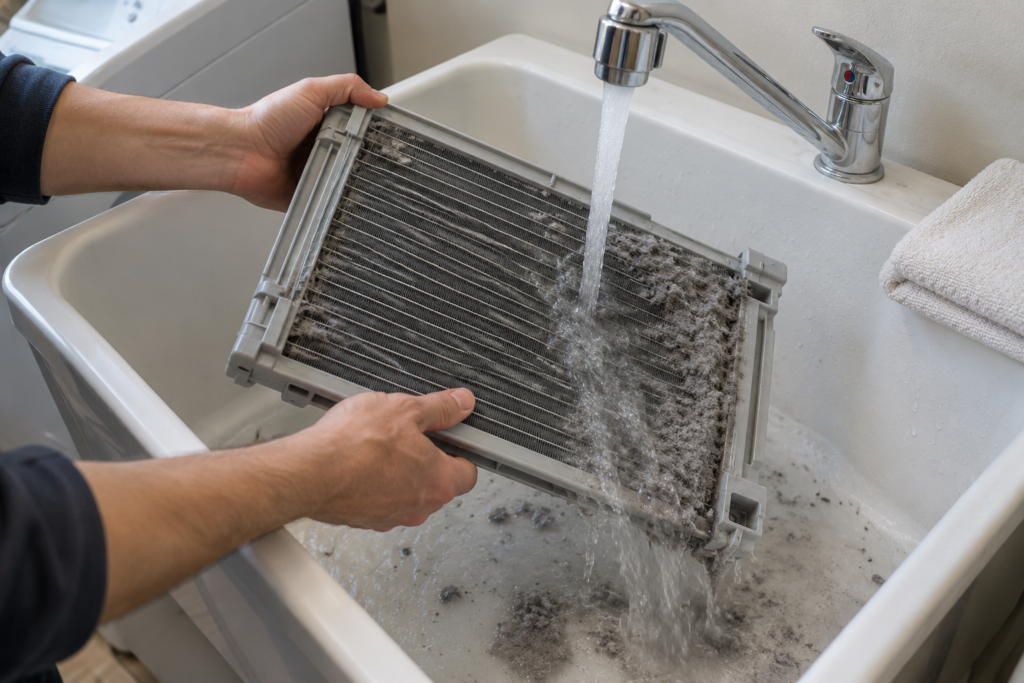
Because the compressor is sometimes only protecting itself. The F72 page says the control board raises the code when the compressor will not start, runs at the wrong speed or draws abnormal current, and it names blocked airflow as one cause that an owner can fix. A heat exchanger caked with lint stops the heat exchange, the compressor overloads, and the board shuts it down. Cleaning the heat exchanger, cleaning the lint filter and switching the dryer off at the mains for fifteen minutes gives the thermal protection time to reset.
Listen during the next cycle as well: a healthy compressor makes a low hum when it starts, and clicking with no hum points at the start circuit, a detail worth passing on to the technician. If F72 stays away after that, you have avoided the most expensive line in the table. If it returns, the page says the compressor motor, its start circuit or the sealed refrigerant circuit is the likelier cause, and all three need a technician.
What Adds to the Bill Beyond the Part
Three things move a heat pump dryer quote more than the part itself, and asking about them before the visit avoids surprises.
- Labor time. The code page puts an F72 repair at two to four hours, so labor is a large share of the total, much more than for a sensor.
- The diagnostic fee. The cost guide gives a diagnostic from $89 and says most service companies credit it toward the repair if you go ahead. Confirm that when you book.
- A second fault. A compressor that failed because of blocked airflow can come back if the airflow is not fixed, so a sound estimate includes cleaning the heat exchanger and checking the lint filter.
- Warranty status. The F72 page says a heat pump should be covered while the machine is under warranty, so check the dates before paying for anything.
It also helps to ask what the visit will include before the technician arrives. A sound heat pump diagnosis covers more than reading the code: it checks the heat exchanger and lint filter, listens for the compressor to start, looks at the start circuit and confirms the room is warm enough for the machine to work. If an estimate names the compressor without any of those checks behind it, ask what was tested.
Which Cheaper Faults Look Like a Heat Pump Failure?
Several lower-priced faults leave you with the same damp laundry, and a good diagnosis rules them out first. None of them involves the sealed system, and none of them should be priced like a compressor.
- F78, the condensation drain. A full container, a blocked pump or a kinked drain hose stops the water leaving, and drying slows down. The F78 page prices a typical repair from $120, and the first fix is simply to empty and clean the container.
- F15, overheating protection. The safety thermostat has tripped, which the F15 page ties to restricted airflow, not to a failed part.
- A cold room. Heat pumps work less efficiently in a very cold garage; the F72 page gives a typical minimum operating temperature of about 10 degrees Celsius, around 50 degrees Fahrenheit, so check your owner's manual for your model.
- Temperature sensors. A reading that is out of range makes the board stop heating, and the sensor itself is a low-cost part.
Is a Compressor Repair Worth It on an Older Dryer?
Usually not on a machine past ten years old, and often yes on a younger one. The cost guide recommends the 50 percent rule: if the repair costs more than half the price of a comparable new Miele dryer, which it puts from $1,000, lean toward replacing. For compressor failures on machines over ten years old it says replacement almost always makes more financial sense, partly because a newer dryer uses less energy.
Weigh the written estimate against that line before agreeing to anything. A compressor quoted at from $500 on a three-year-old dryer is a fair repair; the same quote on a fourteen-year-old dryer is the point where our guide on whether a Miele tumble dryer is worth repairing and the one on tumble dryer repair or replacement become the next thing to read.
How to Keep the Bill Small
The cheapest compressor repair is the one that never happens, and for a heat pump dryer that is mostly about airflow. The routine is short and costs nothing.
- Clean the lint filter every load. A clean filter reduces strain on the heat pump, as the F72 page says.
- Rinse the heat exchanger on a schedule. The code page describes rinsing it under running water and letting it dry completely before it goes back; our tumble dryer maintenance guide covers the routine.
- Empty the condensate container. Do it before every cycle on a model that has one.
- Keep the room above freezing. A dryer in an unheated space works harder and cools down badly.
For the broader price picture, the Miele tumble dryer repair costs guide lists belts, thermostats, bearings and boards alongside the compressor. The dryer repair service covers every code above. Book a diagnostic on the schedule page, or contact us with the error code and the model number so the technician arrives with the right part.