 Daniel Mitchell
Key Takeaways
- Most steam burns come from the wand: a valve that sticks, a nozzle clogged with milk or a wand handled while hot.
- F11 on a Miele coffee machine means the steam valve is not opening or closing correctly; scale is the most common cause.
- A full descaling program with Miele tablets, never vinegar, is the first step, followed by a five-minute power reset.
- With F11 you may still brew plain coffee, but not milk drinks until it is fixed.
- Steam that will not stop or a burning smell means switch off at the mains and stop using the machine.
The Bottom Line
Clean the milk system after every milk drink, keep the nozzle clear and descale on schedule. If F11 appears, descale and reset; if steam keeps leaking or you smell burning, switch off and stop. The price is confirmed after diagnosis, with a written estimate before work begins.
For Miele coffee machine steam safety, a few habits and one fault code matter most. Steam and the hot milk it heats cause burns in seconds, and most of the risk sits at the steam wand, the one part of the machine you hold while it is working. A valve that sticks, a nozzle that clogs with milk or a wand wiped while it is still hot all raise that risk. This guide sets out what to watch for, what the steam valve fault F11 means and the point at which you should stop using the machine and call for service.
| What you notice | What it can mean | What to do |
|---|---|---|
| No steam from the wand | Scale in the steam valve or a blocked nozzle | Descale, then wipe and unblock the nozzle |
| Weak steam even after descaling | Scale still in the valve | Descale again; if it stays weak, book service |
| Steam keeps leaking after you finish | Valve stuck open | Stop using the machine and book service |
| F11 on the display | Steam valve not opening or closing correctly | Descale, then power off for five minutes |
| Burning smell with F11 | A fault that should not be run through | Switch off at the mains and stop using it |
What Makes a Coffee Machine Steam Wand Dangerous?
The steam itself and the milk it heats, because both can scald instantly and neither gives a warning. The danger rises when the machine does something you did not expect: steam that will not stop, steam that comes out unevenly through a partly blocked nozzle, or a wand that is still hot when you reach for it. None of that needs a dramatic failure. A wand with dried milk on its tip is enough.
It helps to remember that steam and hot milk behave differently from hot water: they spread, they spit and they cling to skin. A machine that makes a drink in seconds can still hurt someone in less time than that, so the habits below matter more than any single setting.
That is why the steam system is worth a few minutes of care. It is also why a steam valve fault is not only an inconvenience: a valve that fails to close is a machine that keeps releasing steam when you think it has stopped.
What Does F11 Mean on a Miele Coffee Machine?
That the steam valve is not opening or closing correctly. The F11 page lists three things you might see: no steam from the wand, steam that leaks continuously because the valve is stuck open, and the code itself on the display. It lists four causes: scale buildup in the valve, a failed valve solenoid, a mechanically stuck valve and a wiring fault.
Scale is the cause you can do something about. The page says a full descaling program is the first move, because scale in the steam valve is the most common cause, and that regular descaling prevents steam valve issues. The solenoid, the stuck valve and the wiring are for a technician.
Everyday Habits That Prevent Burns
Most of these take seconds, and they protect your hands as much as the machine.
- Clean the milk system after every milk drink. Our maintenance guide says milk left in the system for even a few hours can sour and block narrow valves.
- Wipe the wand and clear the nozzle. The F11 page says milk residue can block the tip, so wipe and unblock it, once it has cooled.
- Never point the wand at yourself or anyone else. Treat it like a hot tap that can spit.
- Keep children away while it steams. A wand at counter height is within a child's reach.
- Use a deep cup and keep your free hand clear. Hold the jug by the handle, not the body.
- Descale every two to three months, or when the machine prompts. The maintenance guide gives that interval and says to use Miele descaling tablets; our F30 page warns that vinegar may damage internal seals. Your operating instructions give the exact program for your model.
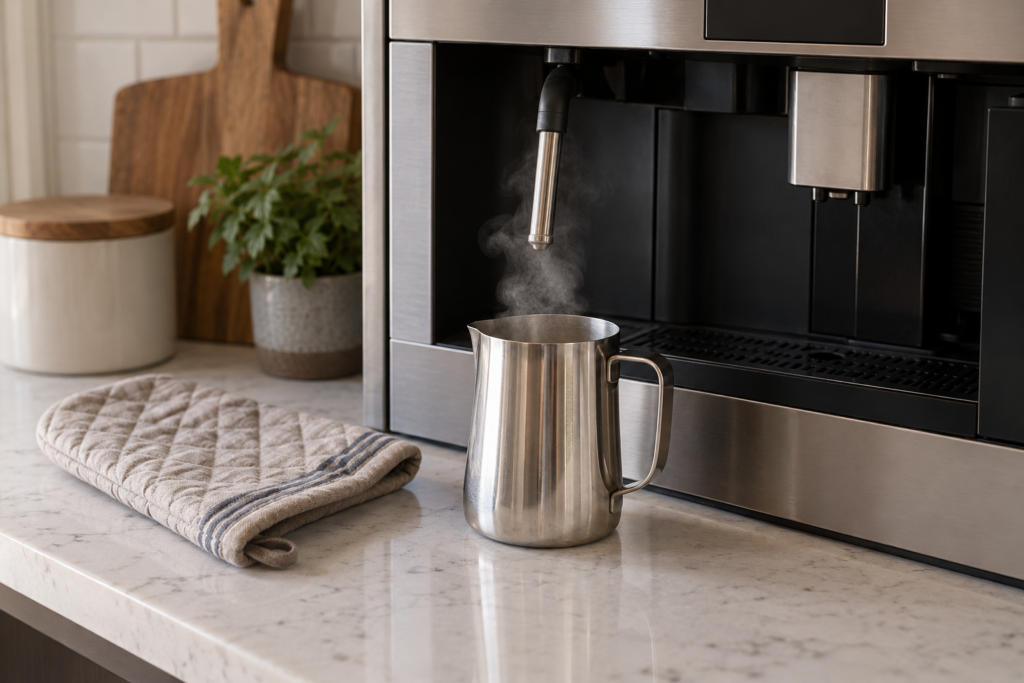
Is It Safe to Keep Using the Machine With F11?
Maybe, but only for plain coffee. The F11 page says brewing may still work without steam, so you can make coffee but not milk-based drinks until the fault is resolved. That is the safe reading: use the machine for what does not need the steam valve, and leave the wand alone.
The same page says to stop immediately in two situations:
- Steam leaks uncontrollably. The valve is likely stuck open.
- There is a burning smell. Something in the machine is overheating.
In either case, switch the machine off at the mains, let it cool before touching the wand and do not run it again until it has been checked. A valve stuck open is a fault that should not be left to see how it behaves.
Descaling the Right Way
Descaling is the one piece of upkeep that is also a safety measure here, because scale is the most common cause of a steam valve fault and a sticking valve is what turns a nuisance into a burn risk. Skipping it saves a little time and puts the valve under strain every time you froth milk.
Run the full descaling program with Miele descaling tablets. Our maintenance guide says the cycle takes 30 to 45 minutes and uses about 500 ml of water, and that it must not be interrupted. After it finishes and the machine has had a five-minute power reset, test the steam. The F11 page says that if only weak steam comes out, descale again.
- Follow the on-screen prompts. Do not pause or switch off partway through the cycle.
- Do not substitute vinegar. Use Miele-approved descaler; vinegar and generic descalers may damage internal seals.
- Wipe the wand afterward. Clear any loosened scale or milk from the tip before the next milk drink.
- Test the steam into a cup. Check it is strong and even before you froth milk.
When the Valve Needs a Technician
When descaling and a power reset do not clear F11, or the steam still leaks. The page names three reasons to call: the valve solenoid has failed, the internal valve is stuck, or the machine is still under warranty. It lists a typical repair from $150 and a professional repair time of 30 minutes to two hours; the final price is confirmed after diagnosis on site, with a written estimate before work begins.
This guide does not rely on recall pages. If you want to know whether a model has ever been the subject of a recall, search the model on the CPSC website, cpsc.gov, and check the manufacturer's own support page, not a third-party list. Our coffee machine repair service covers the steam valve, the milk system and descaling faults. Read the coffee machine maintenance guide for the full routine and the coffee machine repair costs guide before you book, then schedule a visit or contact us with the code and the model number.