 Daniel Mitchell
Key Takeaways
- F50 means the drive motor is not starting, not reaching speed, or drawing abnormal current — severity is rated high.
- Worn carbon brushes are a consumable wear part, not a sign the machine is finished, and replacing them is almost always worth it.
- A failed motor control module is the expensive end, and on a machine past a decade it is where the arithmetic gets close.
- An overloaded drum and a jammed object are the two causes you can rule out yourself in ten minutes.
- If the breaker trips when the motor starts, stop resetting it — that points at shorted windings.
The Bottom Line
Brushes are a wear part and worth replacing at any age; a control module or burned windings on a machine past ten years is where replacement starts to make sense. Nobody can tell the two apart without measuring, so get the diagnosis before you decide.
A Miele washing machine F50 error is one of the few codes on these machines that genuinely opens the repair-or-replace conversation. It reports a problem with the drive motor, and the drive motor is the component whose failure modes range from an afternoon's work with a common wear part to a rebuild that competes with the value of the machine. Which end you are at is decided by two things: what failed, and how old the machine is.
| What failed | What the repair involves | Which way it leans |
|---|---|---|
| Overloaded drum | Remove laundry, restart | Not a repair at all |
| Worn carbon brushes | Wear part, motor accessible | Repair, clearly |
| Object jammed behind the drum | Partial strip-down to retrieve it | Repair, usually |
| Motor control module | Electronic assembly replaced | Depends on the machine's age |
| Burned or shorted motor windings | Motor replaced outright | Weigh it against a new machine |
What F50 Reports
This site's F50 reference defines the code as a motor drive problem: the control board has detected that the motor is not starting, is not reaching the expected speed, or is drawing abnormal current. Its severity is rated high, and the DIY share is low — around fifteen percent of cases end without a technician.
That low share is not a warning to stay away; it is a description of where the causes sit. The two homeowner-solvable causes are an overloaded drum and, sometimes, an object jammed where you can reach it. Everything else lives behind the cabinet and involves either a wear part or an electronic assembly.
Rule Out the Free Causes First
Before any of the repair arithmetic matters, spend ten minutes eliminating the causes that cost nothing. Each one also tells you something useful if it does not solve the problem.
- Take laundry out. An overloaded drum can stop the motor reaching speed. Follow the load guidance for your model rather than filling by eye.
- Turn the drum by hand. With the machine off, it should rotate with light resistance. A drum that will not move means something is jammed behind it.
- Reset at the mains for ten minutes, then run an empty spin as a test. Working empty but failing under load points at a motor that is weakening.
- Listen. A healthy motor ramps up smoothly. A buzz without rotation suggests worn brushes. Total silence suggests no power reaching the motor.
- Check the breaker. If it trips when the motor phase begins, stop resetting it — that is a shorted winding, and repeated attempts make it worse.
Carbon Brushes Are a Wear Part, Not a Failure
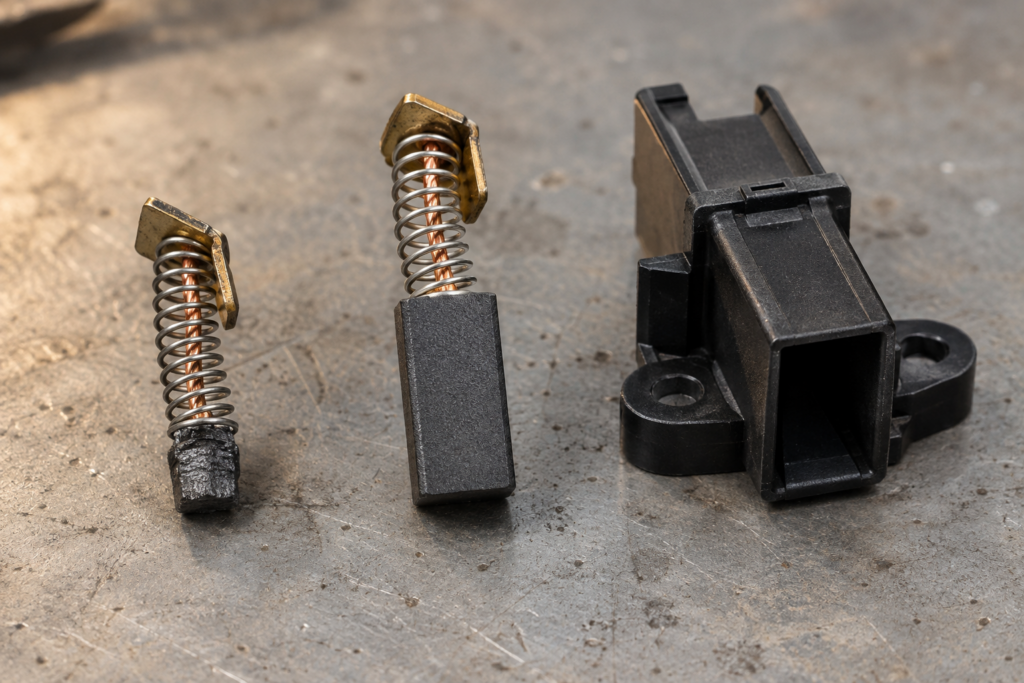
On brush-type motors the carbon brushes are consumable by design. They ride against the commutator, wear down over years of use, and eventually cannot make proper contact. When they go, the motor hums under load and the drum sits still — the classic F50 picture on an older machine.
This matters enormously to the repair-or-replace question, because brush wear is not a symptom of a machine reaching its end. It is a symptom of a machine having been used. A Miele washer whose brushes have worn out has typically done a great many cycles, and the rest of the drive train — bearings, drum, suspension — is usually still sound. Replacing a wear part in that situation is the easiest yes in this entire guide.
The motor control module is a different proposition. It is an electronic assembly rather than a consumable, its failure is not predicted by age, and it is the most expensive single part in the drive system. This is the point at which the machine's overall age starts to carry real weight.
Where the Line Actually Falls
The site's own figure for an F50 repair starts from $250, with a typical bench time of one to three hours. As with every code, that is a starting point: the final price is confirmed after the on-site diagnosis, and you receive a written estimate before any work begins.
- Under about eight years, repair almost always wins. These machines are engineered for a long service life, and one drive fault does not change that.
- Brushes at any age are worth doing. The part is a consumable and the rest of the machine is rarely in the same condition.
- A control module on a machine past a decade deserves arithmetic. Compare the estimate against the remaining life you realistically expect.
- Burned windings plus a tripping breaker on an old machine is where replacement usually wins. You are buying a new motor for an old drive train.
- A second significant fault within a year shifts the balance, whatever the individual estimate says.
Our general guide to repairing or replacing a Miele washing machine works through the same trade-off for the machine as a whole rather than for this one code.
Do Not Keep Running It
F50 is rated high severity for a reason. A motor that is straining, drawing abnormal current, or being restarted into a jam damages more than itself: the control module sits directly in that circuit. If the machine has water in it and will not spin, drain it rather than forcing cycles — our guide to a Miele washing machine that will not spin covers the non-motor reasons that produce the same complaint.
Getting a Verdict You Can Act On
No one can tell brushes from a control module without measuring. Our Miele washing machine repair service tests the motor, the brushes and the control side in one visit and tells you which tier you are in before you commit to anything.
Bring three observations to the appointment: whether the drum turns by hand, what the motor sounds like when a cycle starts, and whether the breaker has tripped. Then book a visit — those three answers frequently decide the diagnosis before the panel comes off.