 Daniel Mitchell
Key Takeaways
- F138 means the detergent dispenser or the TwinDos dosing system is not working; the washer can still run if you add detergent by hand.
- An empty, expired or badly seated TwinDos cartridge and a drawer blocked with dried detergent are the two causes you can prevent.
- Clean the drawer and the recess behind it monthly; residue and mould hide at the back of the cavity.
- Learn how to switch to manual dosing in your manual so a dispenser fault does not stop the washer.
- A jammed drawer motor, a failed dosing pump or damaged wiring is technician work.
The Bottom Line
Reseat the cartridge when the light comes on, clean the drawer and recess monthly and leave the drawer open to dry. If F138 survives that, book a technician; the price is confirmed after diagnosis, with a written estimate before work begins.
The detergent dispenser is the one part of a washing machine that touches chemistry every single wash, and it is the part owners clean least. On a Miele it also carries a code of its own. Miele TwinDos dispenser care, which includes the ordinary drawer that sits beside the automatic system, takes a few minutes a month and keeps F138 from appearing at the worst moment, which is usually halfway through a load when detergent never arrived.
| Part | How often to look | What goes wrong if you do not |
|---|---|---|
| TwinDos cartridge | Whenever the indicator light comes on | Empty or badly seated, so nothing is dosed |
| Detergent drawer | Monthly | Dried residue blocks the compartments |
| Recess behind the drawer | Monthly, with the drawer out | Hidden residue and mould you cannot see |
| Drawer movement | Each time you open it | A motorized drawer that drags is about to jam |
| Hot maintenance wash | Monthly | Residue stays in the drain path |
What Does F138 Mean on a Miele Washer?
F138 means the detergent dispenser is not operating correctly: the motorized dispenser or the TwinDos automatic dosing system has reported a problem. The F138 page rates it low severity, and the washer can still run if you add detergent to the drawer by hand. The code tends to appear early in a cycle, when the dispenser should be activating, and the usual signs are detergent not dispensed, a TwinDos light on, or a drawer that is stuck.
The page lists five causes, and the first two are the maintenance ones: an empty or improperly seated cartridge, and a dispenser blocked with dried detergent. The remaining three, a jammed drawer motor, a failed dosing pump and a sensor or wiring fault, are technician work. That split is the whole case for routine care: about half the causes are things a clean drawer and a seated cartridge prevent.
How Do You Care for the TwinDos Cartridge?
Keep it seated, keep it in date and never let it run empty unnoticed. On models that have TwinDos, the code page tells you to check whether the cartridge is empty, expired or improperly seated, and to press it firmly until it clicks into place. A cartridge that sits slightly proud of its slot can look fine from the front and still dose nothing.
- Reseat it when the light comes on. Take it out, check it is not empty and press it back until you feel it click.
- Check the date. The code page lists an expired cartridge as a cause, so replace one that has been in the machine a long time.
- Do not top up with a different product. Use what the machine was designed for and follow your manual.
- Know how to switch to manual dosing. The page says you can disable TwinDos and add detergent by hand as a temporary workaround; your manual shows how on your model.
The last point is the useful one. A washer with a dispenser fault is not a washer that cannot wash, and knowing the manual setting turns a code into a nuisance instead of a stop.
How Often Should You Clean the Detergent Drawer?
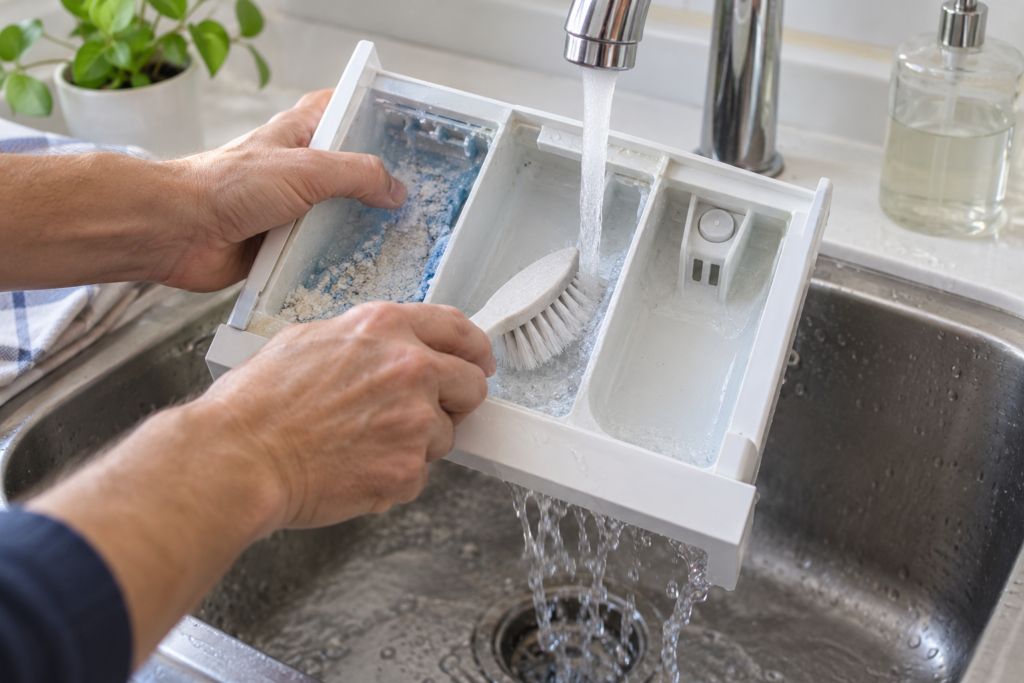
Monthly, and the washing machine maintenance schedule on this site puts it in the monthly tasks for the same reason. Remove the drawer completely by pressing the release tab and pulling, rinse it under warm water, and scrub any buildup with an old toothbrush. Then clean the recess inside the machine where the drawer sits, because that cavity traps residue and mould you cannot see from the front.
- Press the release tab and pull. Take the drawer out fully, not just partway.
- Wash every compartment. Warm water and a small brush clear dried powder and thick liquid alike.
- Look into the empty recess. The F138 page suggests a flashlight, because solid chunks of detergent can hide at the back of the cavity.
- Dry and refit the drawer. A wet drawer attracts fresh residue, so let it drain before it goes back.
Our Miele washing machine maintenance schedule puts this task next to the hot maintenance wash and the drain filter check, and doing the three together costs little extra time.
Is It Safe to Keep Washing With F138 Showing?
Yes, with care. The code page says F138 does not prevent the machine from running, and that you can add detergent to the drawer manually while you troubleshoot. What you should not ignore is a drawer that is completely stuck or detergent leaking from the drawer during a cycle; the page lists both as reasons to stop.
The reset is simple: switch the washer off at the mains for five minutes so the dispenser motor controller can reinitialize, then try to open and close the drawer to see whether the motor works. If it does not move, or if the code returns on the next cycle, the fault is not dirt.
What the Dispenser Shares With the Rest of the Washer
The dispenser does not work alone, and the other parts of the water path explain several of the symptoms owners blame on it. Detergent that never leaves the drawer can leave a residue that reaches the drain filter, and a door seal kept damp by a closed door grows the same film. That is why the monthly routine bundles three jobs, the drawer, the filter and the hot wash, instead of treating each as a separate chore.
It also explains why stains after a wash should send you to the drawer before the repair line. If the drawer is clean and the cartridge is seated, a washer that still dispenses nothing is telling you the fault is mechanical, and the code is probably already on the display.
A Routine That Prevents Most Dispenser Faults
Four habits cover almost everything above, and none needs a tool.
- After a wash. Leave the drawer slightly open so it dries, the same logic as leaving the door ajar.
- Each month. Pull the drawer, clean it and the recess, and run the hot maintenance wash from the schedule.
- When the light shows. Reseat the TwinDos cartridge before assuming a fault.
- At the first stiffness. If the motorized drawer drags or does not open smoothly, clean it that day, because a jam is easier to stop than to repair.
It is not wasted effort. A dispenser that dosed nothing leaves clothes with stains that look like a washer problem, and the instinct is to wash them again, which wastes water and energy.
When a Dispenser Fault Needs a Technician
When cleaning and reseating do not help. The F138 page names a jammed motorized drawer, a failed TwinDos dosing pump, damaged sensor wiring and a machine still under warranty as reasons to call. A typical dispenser repair starts from $80 on this site, with the price confirmed after diagnosis and a written estimate before any work begins, so it is among the cheaper washer codes.
If other washer codes have appeared alongside it, read the washing machine repair costs guide to see where F138 sits, and note that a dispenser fault does not by itself point toward replacing the machine; the washing machine repair or replace guide treats TwinDos as a bonus feature, not a deciding factor. Our washing machine repair and preventive maintenance services cover the dispenser; schedule a visit or contact us with the code and the model number.