 Daniel Mitchell
Key Takeaways
- F4 on a Miele refrigerator means the internal circulation fan motor is not working correctly, and cooling becomes uneven.
- The fan is one of the smaller repairs; the F4 page puts a typical repair from $100, and replacement of the whole refrigerator rarely makes sense for it alone.
- Food touching the blade or frost around it can cause F4, and both are checks you can make before calling.
- If F4 returns after a reset and a defrost, the motor has failed and needs a technician.
- Weigh replacement only when the fan is one fault among several on an older machine.
The Bottom Line
Clear the fan vent, defrost if there is frost and reset once. If F4 returns, repair the fan motor, from $100 on the code page, unless the refrigerator is old and already failing elsewhere. The price is confirmed after diagnosis, with a written estimate before work begins.
Inside a Miele refrigerator a small fan keeps cold air moving, so that the top shelf and the back corner are not at different temperatures. When that fan stops, the compressor can still be running perfectly and the cabinet starts to go wrong anyway. The display then shows F4, the fan motor fault. This guide is about that one part and the choice that follows it: repair the fan or replace something bigger. For the question of the whole refrigerator, read our guide on whether a Miele refrigerator is worth repairing.
| Finding | Likely cause | Fix or replace? |
|---|---|---|
| Food or ice touching the fan blade | Obstruction | Fix: clear it, defrost if needed |
| Frost around the fan, no hum | Ice buildup blocking it | Fix: defrost, then watch for a repeat |
| Fan starts after a reset, then fails again | Motor or wiring | Repair the fan; a technician decides which part |
| Grinding or scraping from the fan | Failing motor | Repair soon; stop using if temperatures rise |
| F4 together with other faults on an old unit | A tired machine | Weigh the whole refrigerator |
Should You Fix or Replace a Miele Refrigerator Fan Motor?
Fix it, in nearly every case, because the fan is one of the smaller repairs in the refrigerator. The F4 page puts a typical repair from $100 with a visit of 30 minutes to an hour and a half, which is a fraction of the cost of a new built-in. The final price is confirmed after diagnosis on site, with a written estimate before any work begins.
Replacing the refrigerator over a fan only makes sense when the fan is one problem among several on a machine near the end of its life. The site's refrigerator guide says to consider replacement when the repair cost passes half the price of a new unit, when there have been three or more major repairs in five years, or when a compressor fails on an older machine. A fan on its own rarely meets any of those tests. In practice, the Miele refrigerator fan motor fix or replace choice comes down to two things: the age of the machine and whether anything else has been failing alongside the fan.
What Does F4 Mean on a Miele Refrigerator?
It means the internal circulation fan motor is not operating correctly. The page lists four symptoms: uneven cooling, with some areas cold and others warm; no fan noise, because the usual hum is absent; frost building up on the evaporator, since cold air that does not circulate freezes in one place; and F4 on the display.
The page rates the machine a maybe for continued use. The compressor still cools, but without circulation some areas will be too warm and others too cold, so it is for short-term use only. Stop if the fan grinds or scrapes, or if temperatures climb in several areas, and move perishable food to somewhere reliable.
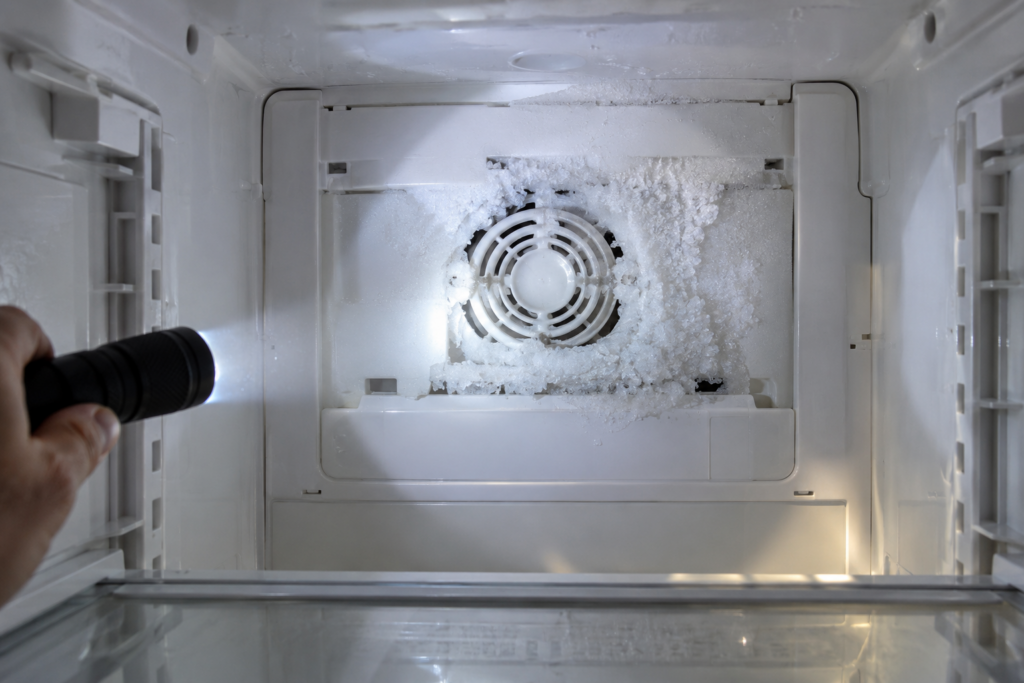
Can Ice Around the Fan Cause an F4 Error?
Yes, and it is one of the two causes you can clear yourself. The code page lists a blade obstructed by food or ice, and frost that has built up and is blocking the fan, as things that are possible for an owner to deal with. A motor that has burned out or seized, and a break in the wiring, need a technician.
- Look near the fan vent. It is usually on the rear wall; remove any food that is touching it.
- Check for frost or ice. If it is there, the page suggests defrosting by turning the refrigerator off for 24 hours, with towels under it for the melt water.
- Listen after the reset. The fan should start within a few minutes of closing the door.
- Press the door switch. The page notes that the fan often stops when the door is open, so simulate a closed door when you test.
- Power off for five minutes. The fan motor controller may restart.
How Do You Tell Whether the Motor Has Failed?
By what happens after the checks. If the fan runs after the obstruction is cleared and the ice is gone, the fault was never the motor. If F4 returns after a reset and a defrost, the page says the motor has failed and the code will keep coming back.
Write down what you did and what happened, because the pattern shapes the repair. A fan that never starts is a different job from one that starts and then grinds, and a technician can tell the two apart faster with your notes. The fan sits behind the rear panel of the cabinet, and the page says not to remove panels or reach into the internal parts yourself.
- Fan blade free, no hum at all. A motor or wiring fault is likely.
- Grinding or scraping. The motor is failing and the page says to stop if you hear it.
- Works after defrost, stops again within days. Look for what is causing the frost, such as a door that does not seal.
What to Ask Before Agreeing to the Repair
A fan repair is a short job, so a good estimate is easy to read. These are the questions that keep it that way.
- Is the part being replaced, or is the cause being cleared? Frost or a blocked blade is a cleaning job, not a motor.
- Has the wiring been checked? The code page lists an interrupted connection as a cause separate from the motor.
- Why did the frost form? A fan that stops because of ice can start again, and a sound diagnosis looks at what let the ice build.
- Is the unit under warranty? The page lists warranty as a reason to call, and the repair then belongs with the warranty.
If the answers show a simple fan job on a machine that is otherwise healthy, there is little reason to look at replacement at all. Keep the fridge stocked sensibly while you wait for the visit, with space around the items so air can move, and avoid packing food against the rear wall, where the fan vent usually is.
When Replacing the Refrigerator Wins
When the fan is the latest in a run of failures. The refrigerator guide on this site treats the age of the machine as the deciding factor: under ten years, repair; between ten and fifteen, it depends on the problem; over fifteen, price a replacement and consider how often it has needed attention. A fan fault on a machine that has also needed a compressor repair is the kind of combination that changes the answer. Our F11 compressor repair or replace guide covers that side of the question.
If you are also seeing temperature problems that do not follow F4, the temperature settings guide explains how to tell a setting from a fault. Our refrigerator repair service covers the fan and the checks around it. Schedule a visit or contact us with the code, the model number and what the fan does after a reset.