 Daniel Mitchell
Key Takeaways
- Set a Miele freezer to 0°F (-18°C): colder wastes energy without making food safer.
- The display shows the target, so check the real figure with a freezer thermometer among the packages after a full day.
- A freezer that drifts warm is usually a seal, airflow or frost problem, not a setting problem.
- After a power cut keep the door closed and check the thermometer before trusting the contents.
- If it cannot return to 0°F with clean seals and a normal load, book a diagnosis.
The Bottom Line
Set 0°F, verify with a thermometer after a full day and fix the seal, airflow or frost before touching the dial. If it still will not hold, the price is confirmed after diagnosis, with a written estimate before work begins.
Most people set the freezer once, at installation, and never look again, until ice cream turns soft or a bag of peas frosts over. The Miele freezer temperature setting is simpler than it looks: one target, one way of checking it against reality and a short list of habits that keep the cabinet near that target without turning the dial. Fridge numbers are covered in our guide on Miele refrigerator temperature settings, and this one is about the freezer side.
| What to check | Target | How |
|---|---|---|
| Set temperature | 0°F (-18°C) | Read it on the display or the control |
| Real temperature | 0°F or below | Thermometer among the frozen packages |
| Door seal | Grips firmly all the way round | Close the door on a dollar bill |
| Frost on the walls | A thin dry layer at most | Look and run a hand over it |
| Airflow | Gaps around the packages | Do not pack to the walls |
What Temperature Should a Miele Freezer Be Set To?
0°F, or -18°C. That is the figure our refrigerator guide gives for the freezer, and it is the standard storage temperature for frozen food: at that point food keeps its quality indefinitely, and a lower setting only makes the compressor run longer. If your model shows a setting number instead of a temperature, the manual maps the numbers to degrees, and the middle of the range is almost always the right answer.
Resist the urge to turn it colder in summer. A freezer that has drifted warm is almost never a settings problem; the control was already calling for cold it could not deliver. Lowering the target does nothing about the cause.
How Do You Check the Real Freezer Temperature?
With a separate thermometer, left among the frozen packages for a full day. The display shows the target the control is aiming at, measured at one spot, and it does not tell you what a bag of food in the middle of the drawer is experiencing.
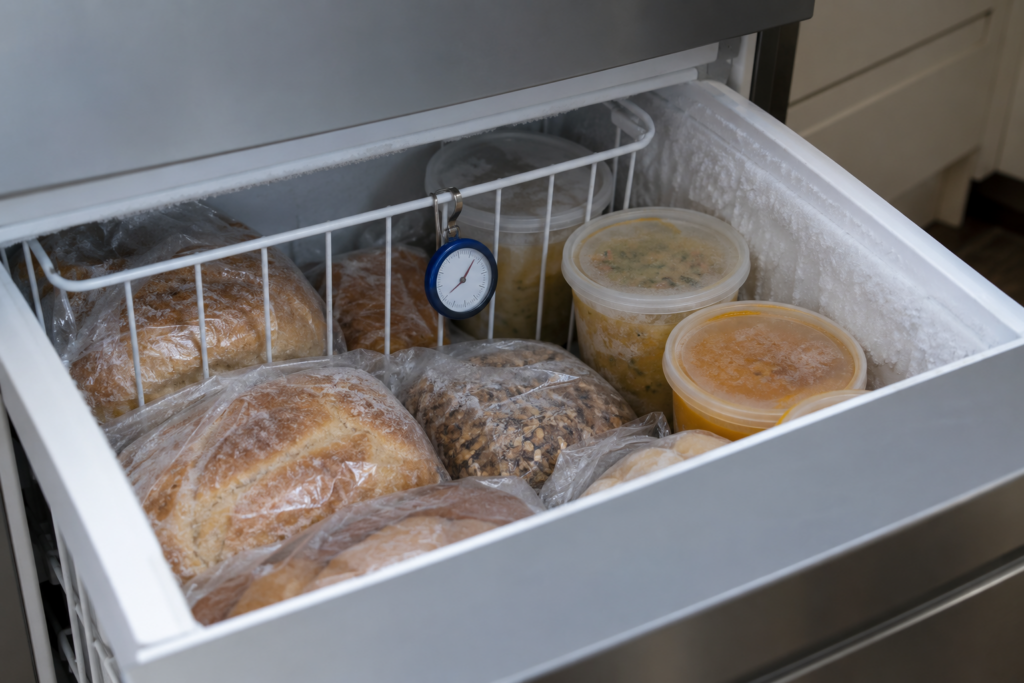
- Use a freezer-rated thermometer. A kitchen thermometer made for the fridge may not read this low.
- Put it among the packages. Air temperature swings when the door opens, and packed food holds a steadier figure.
- Read it in the morning. Before the door has been opened, and after a full day since the last change.
- Repeat after any change. Give the cabinet a day to settle before you judge it.
Why Is the Freezer Not Holding the Setting?
Usually airflow, seals or frost, not a failing machine. The same four checks that apply to the fridge apply here, and each costs nothing to do.
- Door seal. A gasket that does not grip a dollar bill lets warm air in all day. Wipe it clean and check for gaps at the corners.
- Frost build-up. A thick layer on the walls insulates the cabinet from the cooling it needs. If it returns quickly after clearing, something is letting moist air in.
- Overfilling. Packages jammed against the walls block the airflow that moves cold around the cabinet.
- Warm loads. Putting a large amount of warm food in at once warms the whole cabinet for hours. Add in smaller batches.
- Coils and surroundings. Dust on the condenser and a hot, closed-in location make the freezer work harder. Keep the space around it ventilated.
If the display also shows an alarm, look it up before you adjust anything. The F9 page covers the temperature alarm and the F8 page the door open alarm, and a door that is not fully shut is one of the most common reasons for a warm freezer.
Loading a Freezer So It Stays Cold
Loosely, in small batches and with the cold air given somewhere to go. A freezer full of frozen food is more stable than an empty one, because frozen mass holds the cold, but a freezer packed solid against the walls cannot circulate air and develops warm pockets. The goal is a full cabinet with gaps.
- Freeze flat. Flat bags freeze faster and stack with space between them, so the cabinet recovers quicker after a restock.
- Cool food first. Hot dishes raise the cabinet temperature for hours and cause frost on nearby packages.
- Add in batches. A big shop of fresh meat in one go is harder on the compressor than three smaller loads.
- Oldest in front. A tidy layout shortens every door opening.
If your model has a fast-freeze or similar function for large loads, the manual explains how and when to use it. Check the name and the timing there, because they differ between models.
Frost: What Is Normal and What Is Not
A thin, dry layer of frost is normal, and a thick or fast-growing layer is a clue. Frost forms when warm, moist air gets in, so a growing layer points at a door that is opened too often, a gasket that is not sealing or a door left ajar. The refrigerator guide on this site lists frost building on the freezer back wall as one of the four common causes of drift, along with clogged coils, worn seals and overfilling.
Clearing heavy frost brings the cabinet back to its set temperature, but only if you fix the entry point as well. A freezer that rebuilds a thick layer within days after a clean-out needs the seal checked first, then a look at the defrost system by a technician.
What Should You Do After a Power Cut?
Keep the door closed. A full, closed freezer holds its cold far longer than an open one, and general food-safety guidance puts it at roughly two days for a full freezer and roughly one day for a half-full one, as a rule of thumb. Once power returns, check the thermometer before trusting the contents, and do not refreeze anything that has thawed fully and warmed.
If the freezer will not return to 0°F a day after power is back, the fault is more than a setting. A cabinet that cannot reach its target with clean seals, clear airflow and a normal load needs diagnosis, and on this site a diagnostic visit starts from $89, with the final price confirmed after the on-site diagnosis and a written estimate before any work begins.
Seasons matter too. A freezer in a garage or a utility room will run harder in a hot summer and may struggle in a very cold winter, so a reading that is fine in spring and drifts in July is not a fault by itself. Check it again after the weather changes before you decide anything is wrong.
Habits That Keep the Temperature Steady
- Keep the door closed. A long browse costs more than a low setpoint.
- Label and rotate. Knowing what is inside means fewer door openings.
- Leave the dial alone after restocking. The cabinet recovers by itself.
- Clean the seal each month. A wipe with a damp cloth stops residue holding the gasket open.
These habits fall under the regular checks our preventive maintenance service covers, together with the coil and seal checks. For a fault the thermometer cannot explain, our refrigerator repair service starts with a diagnosis. Schedule a visit or contact us with your readings and the model number.