 Marcus Rivera
Key Takeaways
- Grinding or rumbling during the spin cycle almost always means the drum bearings are worn.
- Banging and thumping point to the shock absorbers or simply an unbalanced load.
- Squealing is the drive belt or motor; clunking is usually something caught in the drum.
- Bearing work is a full teardown — parts start from $80, but the labor is the real cost.
- Running the machine on worn bearings damages the drum and the seal behind it.
The Bottom Line
Check the load and the drum for loose objects first. If the noise is a steady grind that rises with the spin speed, stop using the machine and book a diagnostic — bearings only get more expensive the longer they run.
Your Miele washing machine is making a loud banging or grinding noise during the spin cycle. That's not normal, and ignoring it usually makes things worse. The longer you wait, the more damage happens.
Here's what causes this and what you can do about it.
| What you hear | Likely cause | What to do |
|---|---|---|
| Grinding or rumbling | Worn drum bearings | Stop using it — book a diagnostic |
| Banging or thumping | Shock absorbers, or an unbalanced load | Redistribute the load and retry |
| Squealing | Drive belt or motor | Technician |
| Clunking | Something caught in the drum | Check the drum and the seal fold |
Quick Diagnosis: What Does the Noise Sound Like?
Before you start taking things apart, figure out what you're dealing with:
- Banging/thumping - Usually suspension or shock absorber problems, sometimes an unbalanced load
- Grinding/rumbling - Almost always worn drum bearings
- Squealing - Drive motor or belt issue
- Clunking - Something caught in the drum, or the bearing housing is failing
If it's a grinding noise that gets worse during high-speed spins, you're looking at bearing replacement. That's the most common cause of loud noises in Miele front loaders over 5-6 years old.
Check This First (DIY - 5 Minutes)
Before you assume it's a major repair, check these quick things:
1. Unbalanced load
Stop the cycle, open the door, and redistribute the clothes evenly. Run a short spin to test. If the noise goes away, you were just overloading or had a lopsided load.
2. Foreign objects
Pull out the drum and check for coins, buttons, hair ties, or debris stuck in the gaps around the drum or in the drain filter. This is common and easy to fix.
3. Check the drum spins freely
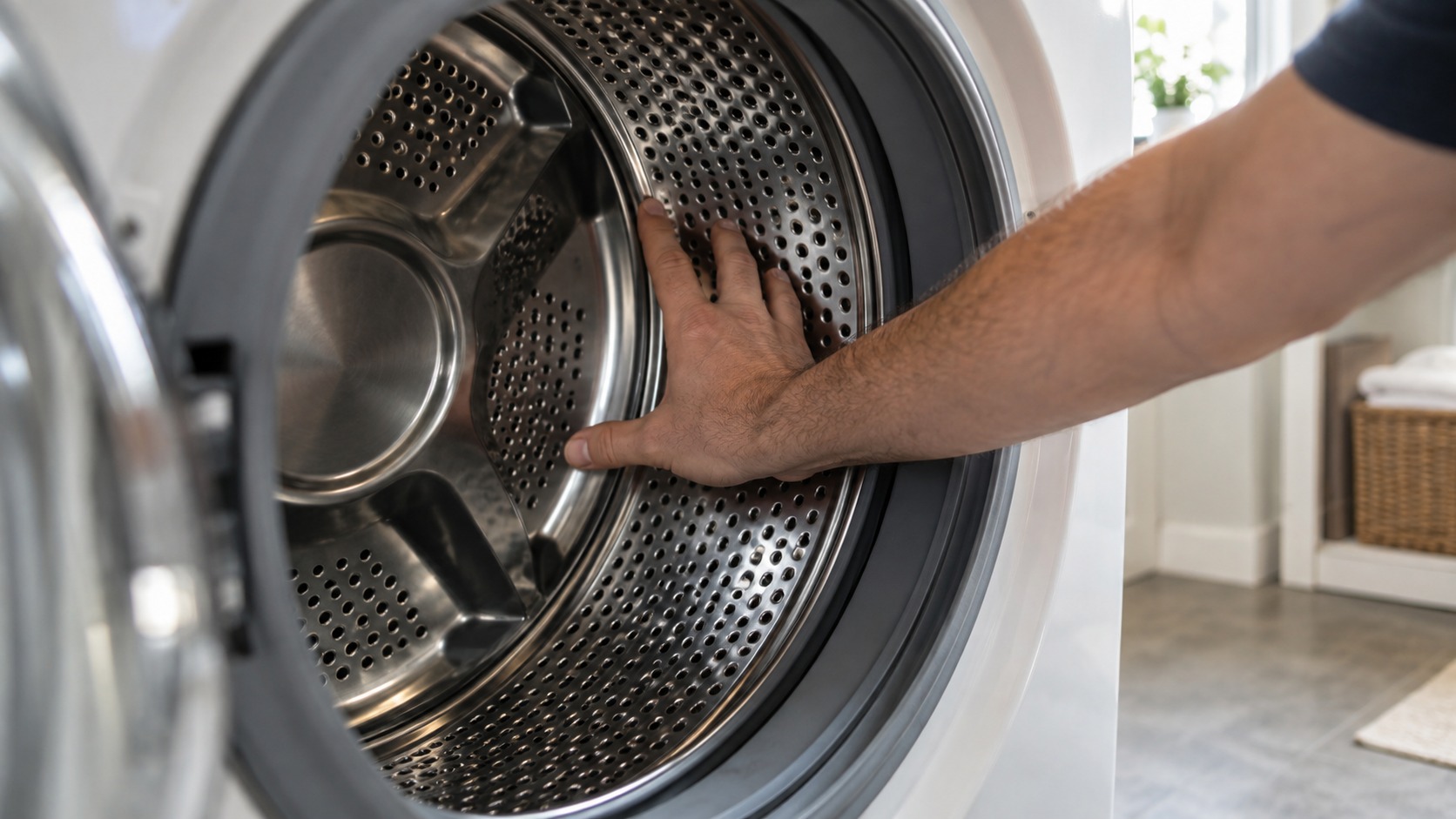
Turn the drum by hand (with the door open). It should spin smoothly with no grinding, resistance, or noise. If it feels rough or makes noise, the bearings are gone.
Most Common Cause: Worn Drum Bearings
If you hear a grinding or rumbling noise that gets louder as the spin speed increases, the drum bearings are worn out. This is the #1 cause of loud spin noises in Miele washers.
Signs it's the bearings:
- Noise starts during the spin and gets louder at higher speeds
- The drum feels rough when you spin it by hand
- You might see a little water leaking around the door seal
- Machine is 5+ years old
The fix:
You need to replace the drum bearings and seal kit. This is a moderate DIY job if you're comfortable taking apart the washer. Plan for 2-3 hours.
What you'll need:
- Socket set
- Bearing puller
- New bearing and seal kit (Miele part #)
- Silicone grease for reassembly
Cost: Parts are from $80. If you hire a pro, labor adds from $200. Total is from $300.
Bottom line: If the machine is under 8 years old and otherwise works fine, replace the bearings. Over 10 years and you might want to consider replacement.
Second Most Common: Failed Shock Absorbers
If you hear a loud bang or thud, especially when the spin reaches high speed, the shock absorbers are shot. Miele uses suspension rods that can weaken over time.
Signs it's the shocks:
- Heavy banging during high-speed spin
- Drum moves around more than normal when you push it
- Noise happens even with balanced loads
The fix:
Replace the shock absorbers (Miele calls them suspension rods). There are usually 2-4 of them depending on your model.
Cost:
Parts are from $40 each. You'll need 2-4 of them.
DIY parts cost from $80. Pro install adds from $150 labor. Total pro repair: from $250.
Other Possible Causes
Worn drive belt
If you hear a squealing or slipping noise, the belt might be worn or slipping. Check for cracks and proper tension. Belt is from $30, easy DIY fix.
Motor issues
A failing motor can make grinding or humming noises. This is less common but serious. You'll usually see error codes too. Motor replacement is expensive, from $400 with labor.
Damaged spider arm
The spider arm (the metal structure holding the drum) can crack or break, causing loud noises. This requires drum replacement, which usually isn't worth it on older machines.
When to Call a Pro
Call a technician if:
- You're not comfortable disassembling the washer
- You tried the easy fixes and the noise is still there
- You see water leaking
- The machine is showing error codes
- The drum feels rough when you spin it by hand (bearings are gone)
A Miele tech will diagnose properly and won't break anything taking it apart. Worth it if you're not experienced with appliance repair.
Should You Fix or Replace?
Fix it if:
- Machine is under 8 years old
- It's otherwise working well (no other major issues)
- Repair cost is under $500
Replace it if:
- Machine is over 12 years old
- Multiple things are failing
- Repair cost would be over $600
- You want newer features and better efficiency
A new Miele front loader runs from $1,200. A mid-range replacement from another brand is from $600.
What to Do Right Now
1. Stop using the machine if the noise is grinding - continued use will destroy the bearing seal and cause water damage
2. Check for objects in the drum
3. Spin the drum by hand to see if it's rough or noisy
4. If it's the bearings or shocks, get quotes from a Miele service tech before deciding to fix or replace
The noise won't fix itself. The sooner you address it, the cheaper the repair.